

After her father passed away, Ashley thought she knew exactly what to do. She was his executor. He had a will. He had a trust. He had told her more than once, “Everything is taken care of for you.”
And he wasn’t wrong. The legal documents were in place. They named the beneficiaries, identified who was in charge, and clearly explained how the estate should be distributed. On paper, the plan looked complete. But within a few days, Ashley began to feel overwhelmed with questions. It was what the will didn’t say that caused so much stress.
She didn’t realize she was unprepared. She was organized, responsible, and close with her father. She had attended the meeting when the estate plan was created. She thought she understood what was expected of her. What she didn’t realize was that the documents provided were only part of what she needed.
Ashley spent the first week making phone calls. She wasn’t sure which bank held his accounts, whether his old employer still had a life insurance policy, or where he kept the password to his email.
The will clearly stated who should receive his property. It did not say where everything was located, how to access it, or what needed to happen next.
A will and trust provide legal direction and can help avoid confusion, conflict, and unnecessary court involvement. But they are not instruction manuals for settling an estate. A will tells people what should happen. It rarely tells them how to make it happen. That practical information can make an enormous difference.
An executor may need to locate accounts, contact banks, collect insurance proceeds, pay debts, file tax returns, and communicate with heirs, all while grieving, all under deadline, and often without a clear starting point.
Without preparation, even simple tasks can become frustrating. A missing password can delay access to important records. An unknown account can go unclaimed. A bill paid automatically from an account no one knows about can continue for months. A safe deposit box may sit unopened because no one knows where the key is. Family members may argue over sentimental items because no personal wishes were ever written down.
A beloved pet may need immediate care with no instructions left behind. A small business may have employees, contracts, or clients that require urgent attention. Digital accounts, such as social media, photo, or online banking accounts, may be inaccessible or go entirely unnoticed. Each of these details may fall to the executor to resolve, often without warning or guidance.
This is why preparing your executor is just as important as naming one. After all, what good is a plan if the person carrying it out doesn’t know where to start?
A strong estate plan should include more than legal documents. It should include a practical roadmap.
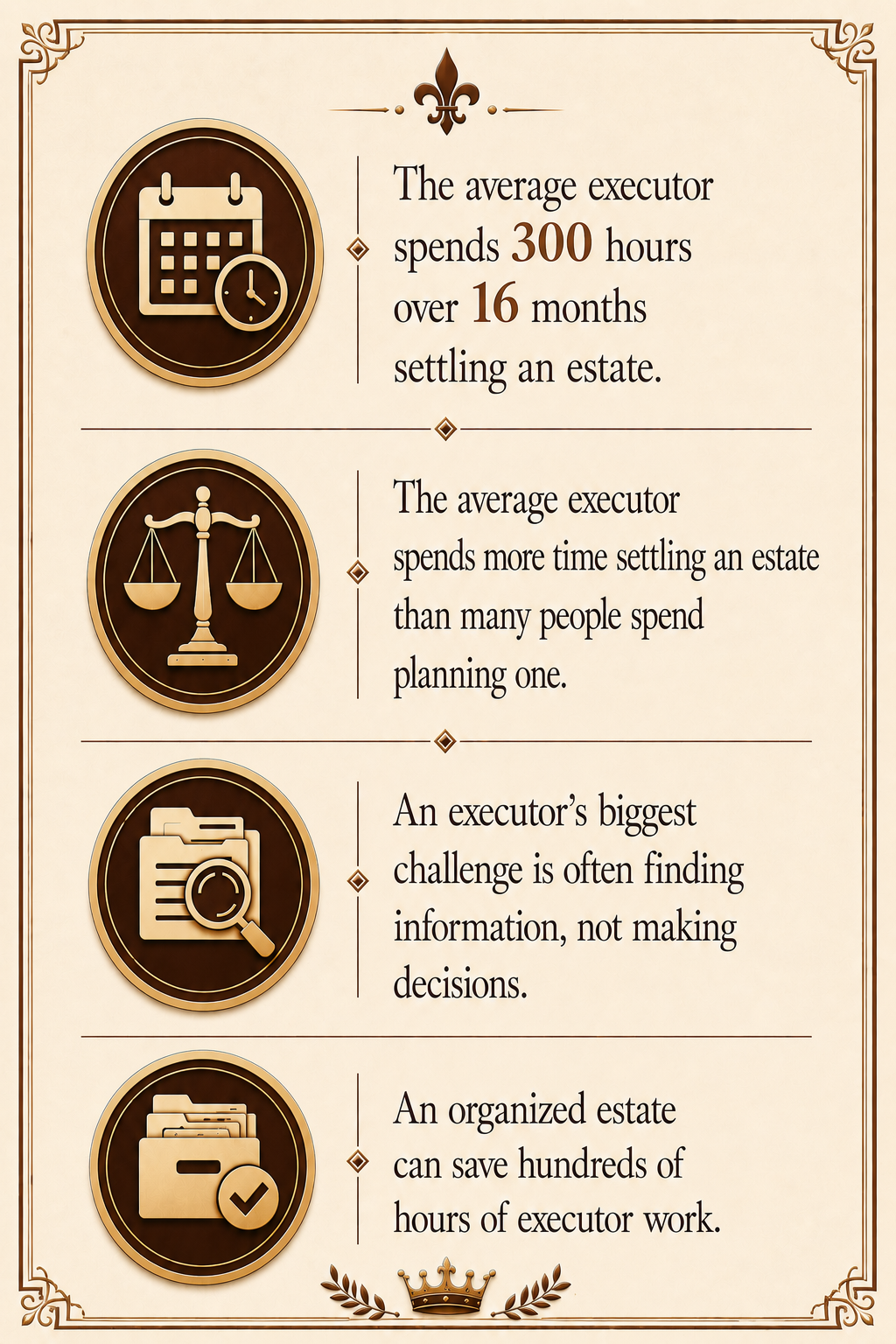
That roadmap doesn’t need to be complicated. It might be a simple document that lists account numbers and institutions, contact information for key advisors, securely stored login credentials, and the location of important documents. It won’t replace a will. But it gives the executor a place to start, and that alone can save weeks of frustration.
Ashley eventually settled her father’s estate. But it took months of phone calls and guesswork, cost her real time and stress, and left her wishing her father had left behind more instructions. He had done so much right. One additional, organized record of the practical details could have made estate settlement considerably easier.
A good estate plan answers the legal questions. A complete plan also answers the practical ones. Is your current estate plan complete?
If the answer isn’t a confident yes, that should be addressed. Please reach out to us for help. We work with families to ensure their estate plan includes not just the legal documents, but also the practical information their executor needs to complete their job efficiently.