
What does new leadership in the United States mean for your finances? Perhaps not as much as you might think. Markets are impacted more by fundamentals of growth, innovation, spending, and inflation. Stocks have also done well regardless of which party is in control.
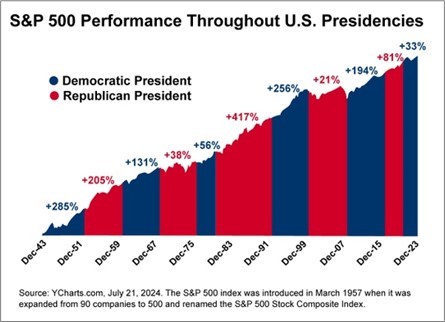
Elections have consequences. They also have happened many times in history. The markets always have had volatility. Despite this, they have also risen over time. Keep your long-term financial plan the same as well. Many things that are fundamental to the economy are still the same.
Prior to the election, the U.S. government was deficit spending like we were in a recession. This has prevented a recession. Neither the Republicans nor the Democrats were talking about the interest in our national debt. I believe we should address the problem now, but I do not expect a major change until most U.S. voters call for it.
Americans had an average credit card balance of approximately $8,600 before the election (USA Today). It is safe to say that it didn’t change, nor did the price of milk and eggs.
The conclusion of the election removed some uncertainty for the markets. It also increased the chances that U.S. corporations see a little less regulation and slightly lower taxes.
Investments Reacted Powerfully
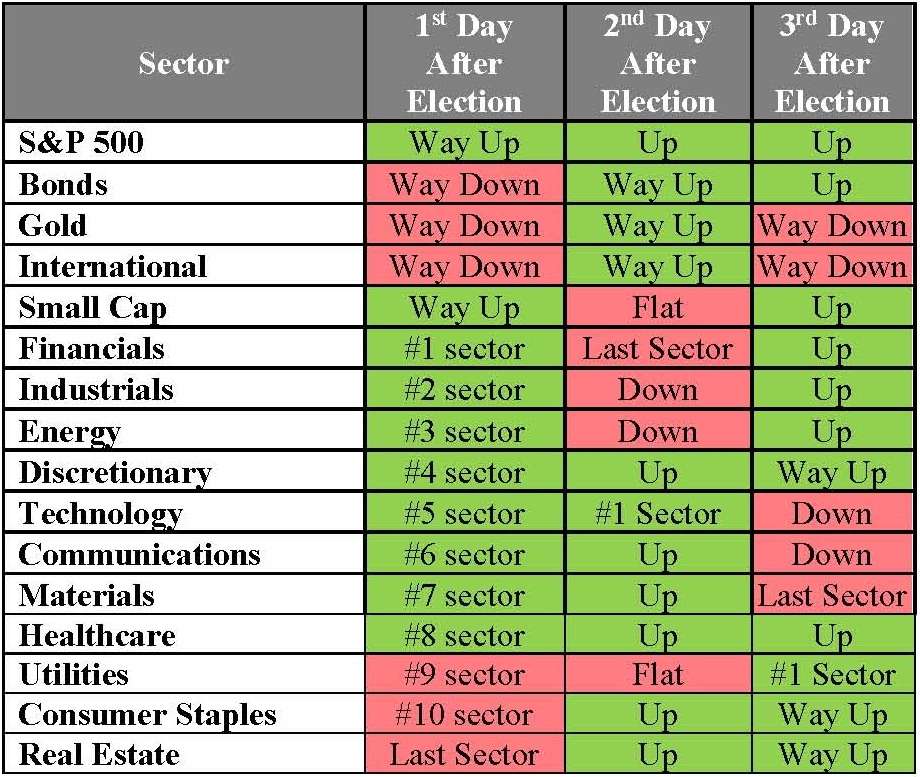
The U.S. markets rose in the first two days after the election, but looking under the hood, markets had a lot of dispersion. The best performers on the first day were the worst on the second. What does it all mean? Most investments do not move in a straight line.
Think of the markets as being divided up. Major asset classes: stocks, bonds, precious metals, etc. Each has its own subcategories. For stocks, these would be U.S. large, U.S. small, and international, as well as the 11 sectors. Each one seemed to take a turn near the top and near the bottom. This helps a well-structured portfolio smooth out the volatility, making money daily, as shown in this example.
What is Going on With Interest Rates?
The Federal Reserve lowered its overnight interest rate in September and forecasts lower rates in November and December. In response, just about every other rate started going straight up. This is what happens when investors have already “priced in” the future. (Something similar happened to stocks in 2018 when the corporate tax cuts became a reality.)
Mortgage rates have also been rising and continue to make things tough in real estate. Higher rates also pressure bond prices, which have struggled. So, how high will rates go in the next month or two? It depends on what is driving the change.
We have reached a pivotal place. Many investors who had too much in bonds in early September have likely lost a lot of money and exited. I see an opportunity here. Bonds are due for a bounce, which may have already started.
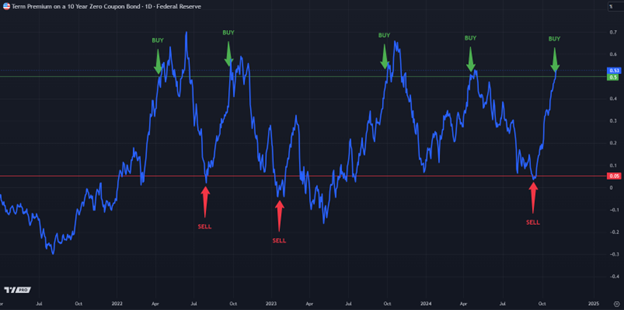
I have three bond indicators that have been flashing “buy” recently. One of these (below) is the risk premium on a 10-year bond. When it is more than 2%, it is attractive. This is not the interest rate but an estimate of how much of that yield is a reward for taking a risk. Could bonds still go down? Sure, especially if inflation rises in the next month or two. I believe the Fed will not allow inflation to rise significantly. So, I look at it like this: When the merchandise you want goes on sale, don’t run from the store. Look around. There are opportunities.
What Is the Fed Doing to Keep Inflation Low?
Federal Reserve members lowered rates by 25 basis points on Thursday and said they will likely lower again in December. Central bankers are either doves or hawks. Fed Chair Jerome Powell is a dove. He is not worried about inflation right now.
Powell is probably doing the right thing. What has me a little worried is that he is not worried. That is a risk. Don’t misunderstand me. This is not a reason to make major changes to an investment plan. All else being equal, it should be good for stocks.
What About Tariffs?
Ninety-nine percent of economists will tell you that tariffs are bad. They are often cited as a contributor to the Great Depression. This is because they create friction in the global economy. Consumers pay higher prices because of tariffs on the goods they want or because these items were manufactured at a location where costs were higher. Ultimately, global cooperation is also diminished.
There are a couple of silver linings to potential tariff increases. (1) The economy has changed since the early 1900s. (2) The reality is likely to be gradual and not as profound as many fear. (3) The United States is a service economy that may need to be more reliant on other countries for manufacturing. It’s efficient and potentially fragile. Tariffs are an attempt to reduce the vulnerability of relying too much on others. Globally, the negatives will outweigh the positives, but within the United States, it may depend on how you prioritize. Within industries, some companies are helped, and others are hurt. Which is which?
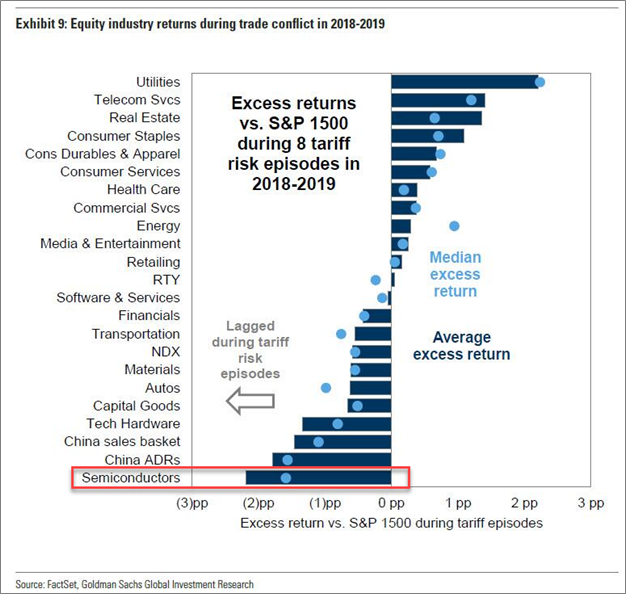
This chart illustrates the changes in recent years when tariffs were rising. There is no way to know if it will repeat in a similar way.