

The new presidential administration has promised big changes. Various policies are already making waves. Though the exact outcomes remain uncertain, the economic tide has certainly changed. The full impact on investors will be significant. It is not over. It has only just begun.
Tariffs: Anti-Growth and Transitory Inflation
Every major trading partner of the United States has been put on notice. Almost everyone is a target for increased tariffs in 2025. Tariffs are a tool to protect domestic industries and carry unintended consequences that will undoubtedly ripple through the economy. Some countries will see the threats of tariffs as a negotiating tactic (likely Canada and Mexico). Others will retaliate with their tariffs (possibly China).
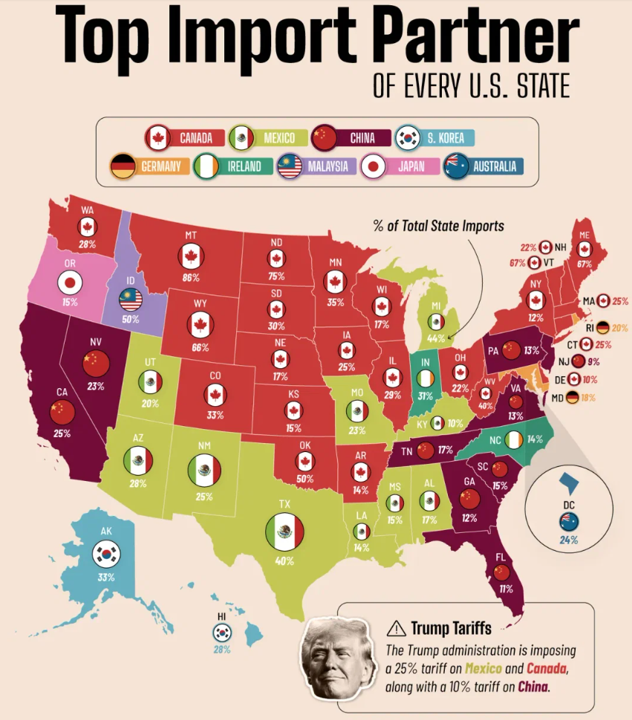
If the Trump tariffs are imposed, prices on U.S. goods will increase. Fidelity Investments estimated that 1/3 of the increase will be paid by consumers this year. The rest will be absorbed by companies in the supply chain and by changes in the value of the U.S. dollar. Prices could go either way in the coming years. It is possible that Americans will pull back on their spending, which will slow the economy and encourage companies to lower prices.
The auto manufacturers are likely to feel the impact of tariffs more than any other industry. Vehicles and vehicle parts represent 4 of the top 5 imports from our North American countries. A major increase in price on these big-ticket items may be met with a drop in consumer demand, which would not be positive for the economy. The best outcome, especially when dealing with our closest neighbors, is negotiating outcomes that do not increase prices.
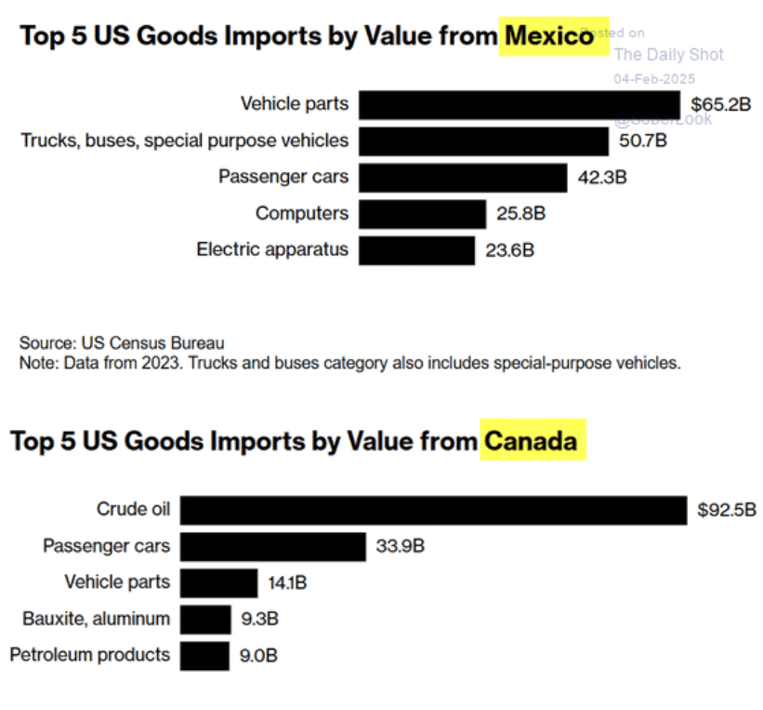
As these are big-ticket items, any major increase in price is likely to be met with a drop in consumer demand, which I do not see as positive for the economy. The best outcome, especially when dealing with our closest neighbors, is negotiating for something good that does not increase prices.
Tax Cut Extension (TCJA): Neutral Impact
The extension of the Tax Cuts and Jobs Act (TCJA) is expected to have a neutral impact on growth and inflation. While the continuation of these tax cuts provides stability for businesses and individuals, it does not introduce new stimulative effects that could spur significant economic growth or inflation. The primary benefit lies in maintaining the status quo, allowing businesses to plan with greater certainty.
Additional Tax Cuts: Investor Positivity
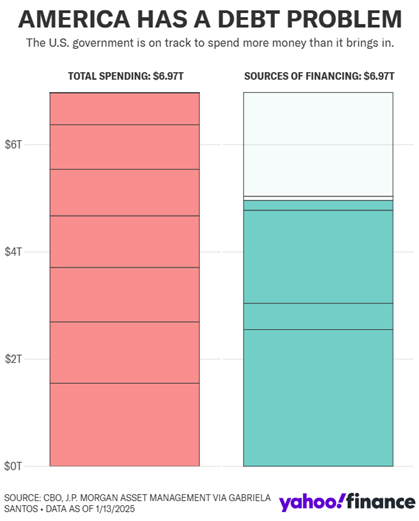
Additional tax cuts are generally viewed positively by investors, particularly those in the stock market. These cuts can increase disposable income and corporate profits, potentially boosting stock prices. However, the impact on inflation is expected to be minimal. The downside is an increase in the federal deficit, which could lead to a slight rise in interest rates as the government borrows more to finance its spending.
Discretionary Spending: Uncertain Direction
The direction of discretionary spending remains uncertain, with shifting priorities and redirected funds. Government spending has been a key factor in sustaining the economy and contributing to sticky inflation. A reduction in discretionary spending could have the opposite effect, potentially easing inflationary pressures but also slowing economic growth.
Deregulation: Long-Term Uncertainty
The long-term impact of deregulation is difficult to predict. For investors, deregulation can be positive, reducing compliance costs and fostering a more business-friendly environment. However, the broader economic implications, including potential risks to inflation, remain uncertain and depend on the specific regulatory changes implemented.
Conclusion
We are keeping a close eye on the markets. They will likely anticipate the impact of new policies and lead the economy. Given the unpredictable nature of these economic policies, it is prudent to adhere to a system that has proven effective. While we cannot foresee every detail, sticking to a reliable framework will help navigate the complexities of growth and inflation.
If you have questions regarding how your investments are or should be structured, please reach out to one of our Private Wealth Consultants.
Listen to a deep dive into the stock market on the Power Up Wealth podcast.