
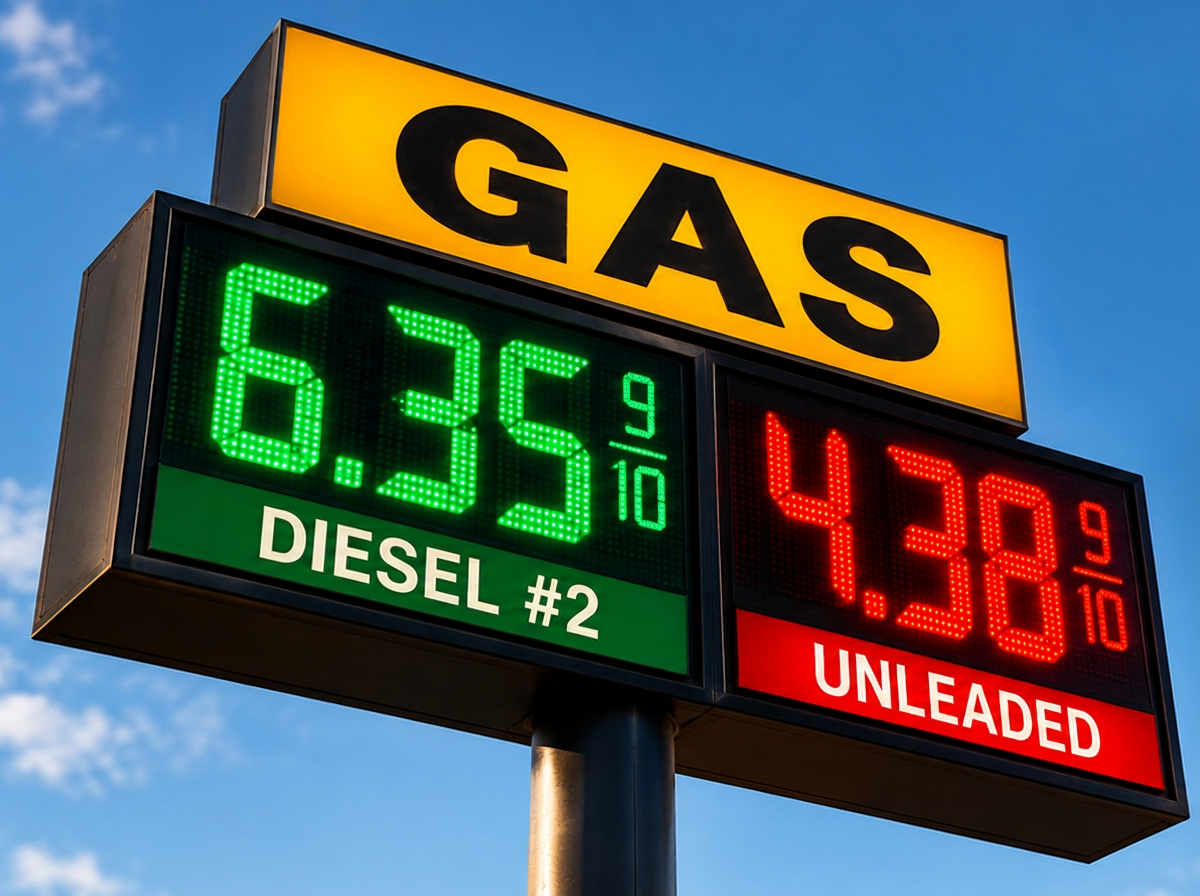
When you fill your gas tank and watch the total climb, do you wonder about interest rates? That glowing number on the sign above the pumps is one of the most honest economic reports in America.
Oil has risen above $90 a barrel, up more than 50% from a year ago.1 When oil rises, it doesn’t stay in the energy aisle for long. Over time, it spreads through your entire budget, from tomatoes to airline tickets.
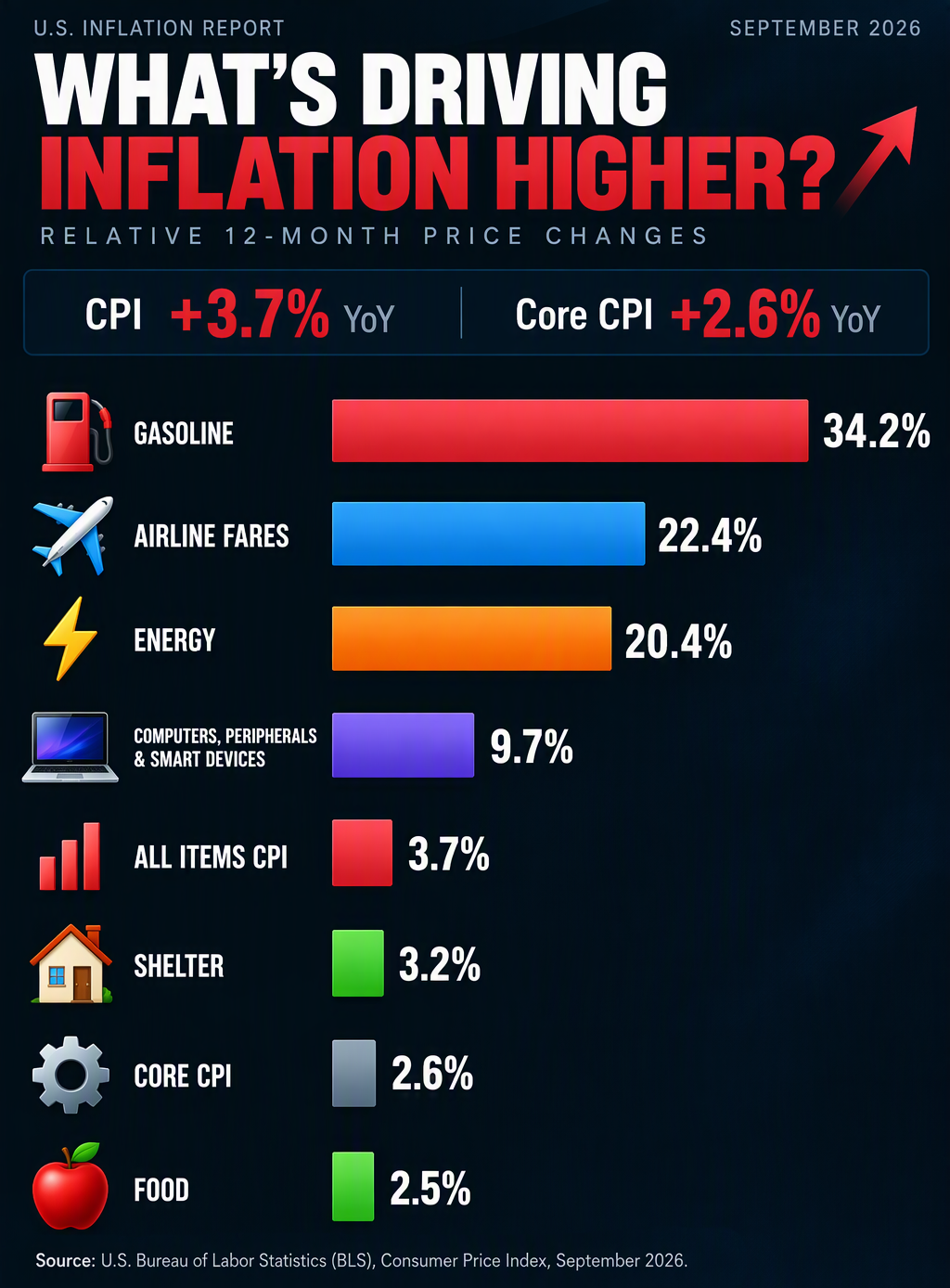
Consumer prices (CPI) have climbed back to 3.7%, well above the Federal Reserve’s 2% goal and moving the wrong way, up from 2.4% in January.² Most of the pressure is still at the pump, but it is spreading. Gasoline, up 34% from a year ago, is doing most of the damage. Core inflation, which excludes food and energy, rose to 2.6% in September from 2.4% in August.2 The risk is that sustained energy costs keep working their way into freight, airfares, groceries, and services.
The artificial intelligence boom may also be feeding inflation. The largest technology companies have reportedly lined up more than $700 billion in AI spending for 2026.3 That is real demand for electronics, electricians, and electricity.
Bond investors want to be paid for the risk of inflation, especially when their money is tied up for 10 or 20 years. The 10-year Treasury yield has climbed from 4.18% to 5.22% this year.4 If you’re shopping for a mortgage or financing a car, that is a major reason your quoted rate has gone up.
Higher rates sting, but they are part of the cure. By cooling demand, they could bring slower price increases and, eventually, lower borrowing costs. For savers, cash and short-term bonds can earn something meaningful. For borrowers, it pays to shop rate quotes. For retirees on a fixed income, inflation is the quiet risk.
The variable to watch is oil. If oil prices come down, pressure on inflation, interest rates, grocery bills, and gas receipts could ease. And if you’ve asked yourself, “How am I going to handle these rising prices?” that is exactly the conversation we’re here to have.
1 St. Louis Fed (FRED), WTI crude: $96.24 (10/6/26) vs. $62.49 (10/6/25).
2 Bureau of Labor Statistics (BLS), Consumer Price Index: September 2026 (released 10/14/26) and January 2026 (released 02/13/26).
3 Reuters via 24/7 Wall St., “Hyperscalers Hit $700 Billion in 2026 AI Spending Plans,” 5/1/26.
4 FRED, 10-Year Treasury yield: 4.18% (12/31/25) vs. 5.22% (10/8/26).