

One of the most significant investments most people will make is in a home. This makes housing the most important sector in the economy. It is also one of the earliest clues as to what is about to happen. New home construction picks up when confidence is growing. Purchases climb when interest rates are low. These changes in housing ripple through the entire economy as everything from jobs to consumer spending heats up or cools down. Seeing what is going on in the industry may give us some hints of what is to come for the rest of America.
According to the National Association of Home Builders, nearly 5 million Americans work in residential construction, roughly 1 in every 30 workers. Home building represents almost 5% of the economy, and that number bumps up to over 15% when one considers the spending impact on home furnishings, utilities, and other expenses.
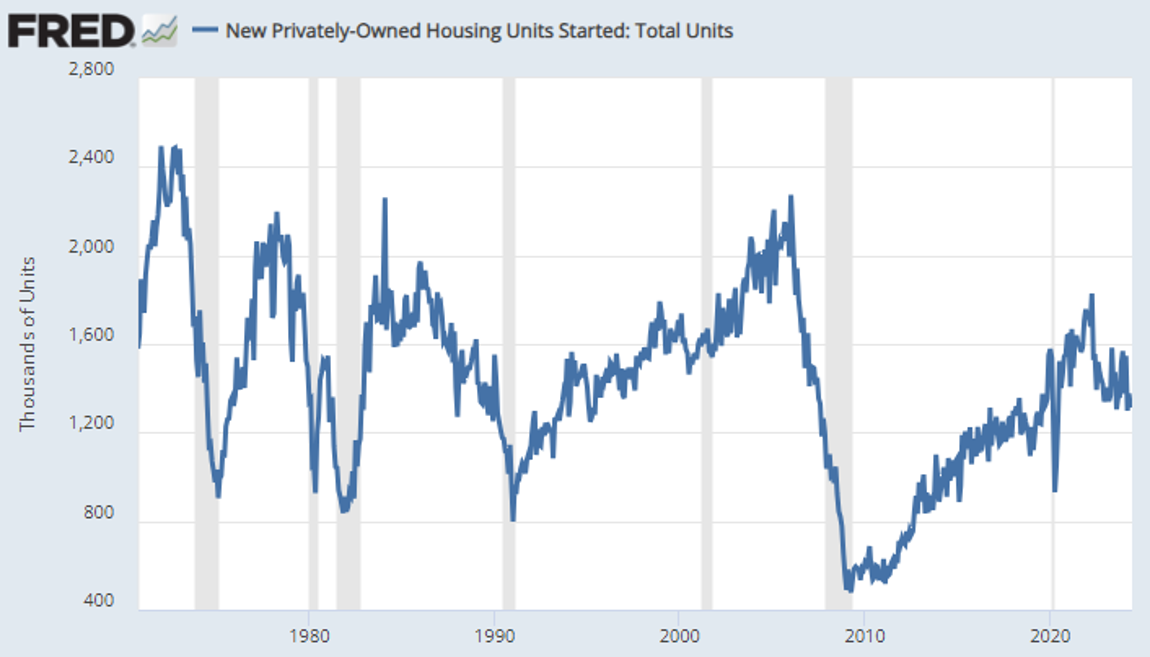
You have probably heard there is a housing shortage because new construction has been lower than population growth for most of the last 15 years. This is what it has looked like over the last 50 years.
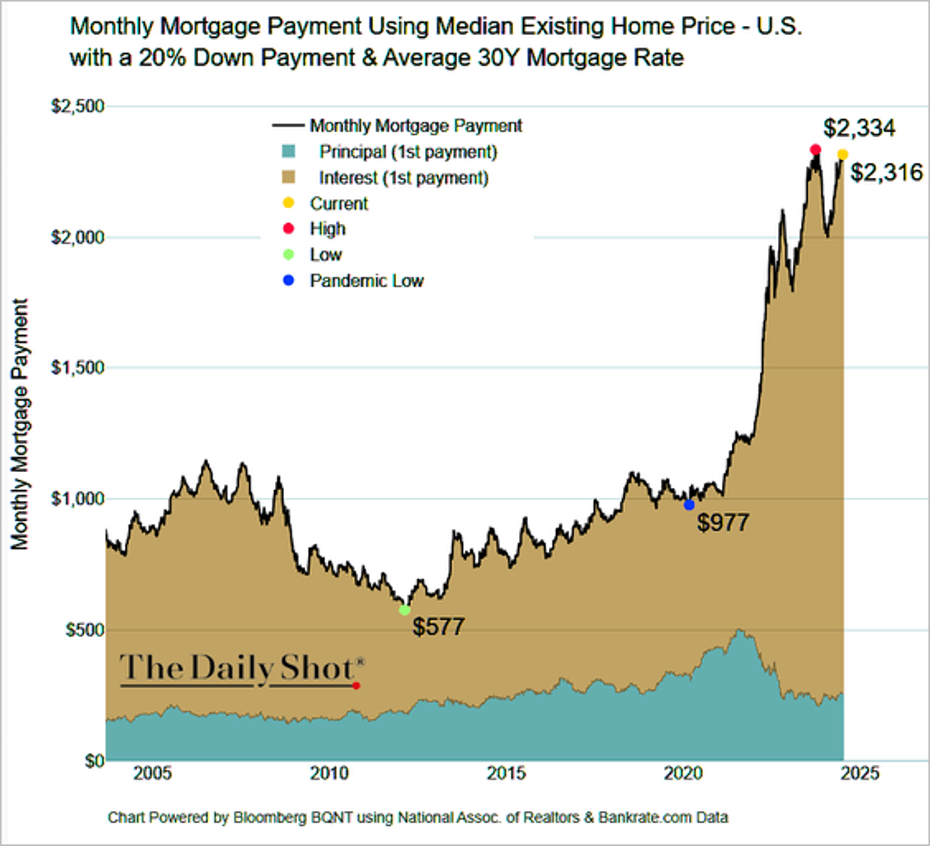
Builders have tried to make up for lost time, but sales are slowing regardless. Mortgage rates have tripled from just three years ago, making monthly payments significantly higher for new buyers.
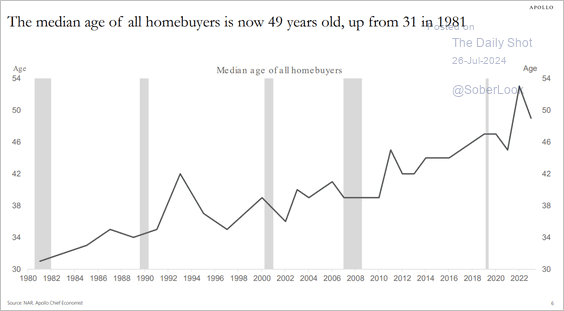
One might think that home values would fall with higher rates. Prices have continued to climb–making affordability of a home more difficult than any time in modern history. Something had to give. New construction is slowing in 2024.
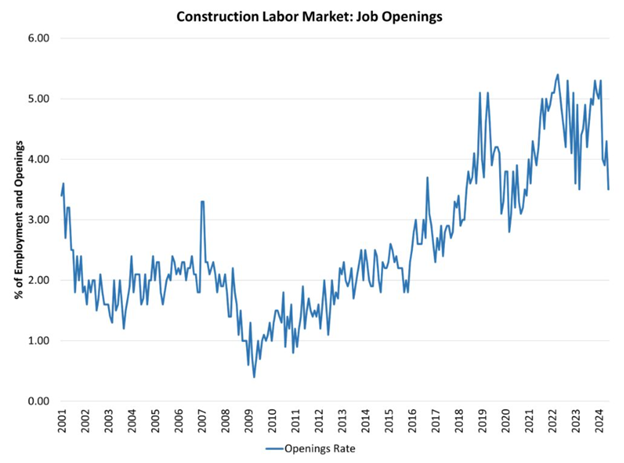
Permits for new housing have also declined in recent months. Hiring has slowed some. And the overall impact has been a gradual slowdown in economic activity in many areas of our lives.
These slowdowns should be expected. The U.S. economy has been growing at roughly 3% for 50 years. During that time, there have been six recessions, which lasted an average of 12 months. These disruptions in growth can be financially devastating to those unaware. For the prepared investor, they can be irrelevant or even helpful.
This list gives us an idea of how often recessions occurred in the past. (I do not count the recession of 2020 because it was caused by a pandemic; it was too short to permanently impact employment, income, or housing prices; and the government stimulus of over $5 trillion meant that any hardship was also too short to cause widespread financial pain.)
- 1970s: 2 recessions
- 1980s: 2 recessions
- 1990s: 1 recession
- 2000s: 2 recessions
- 2010s: 0 recessions
- 2020s: 0 recessions
My recommendation is to not live in fear. Be patient and prepared. Winter does not get canceled when snow does not fall in December.
Eventually, a slowdown will arrive, and it will surprise many who have never lived through one as an adult. For the rest of us, we should remember that these cycles can be a good thing. Cycles expose mistakes. They hurt. They also teach us valuable lessons and can provide us with new and valuable opportunities. I know many people looking forward to just such an opportunity to buy.
Data on the importance of housing to the economy as well as job openings come from the National Association of Home Builders. All other construction data comes from the Federal Reserve Bank of St. Louis. Official recession information is from the National Bureau of Economic Research. Past performance does not guarantee future results.